
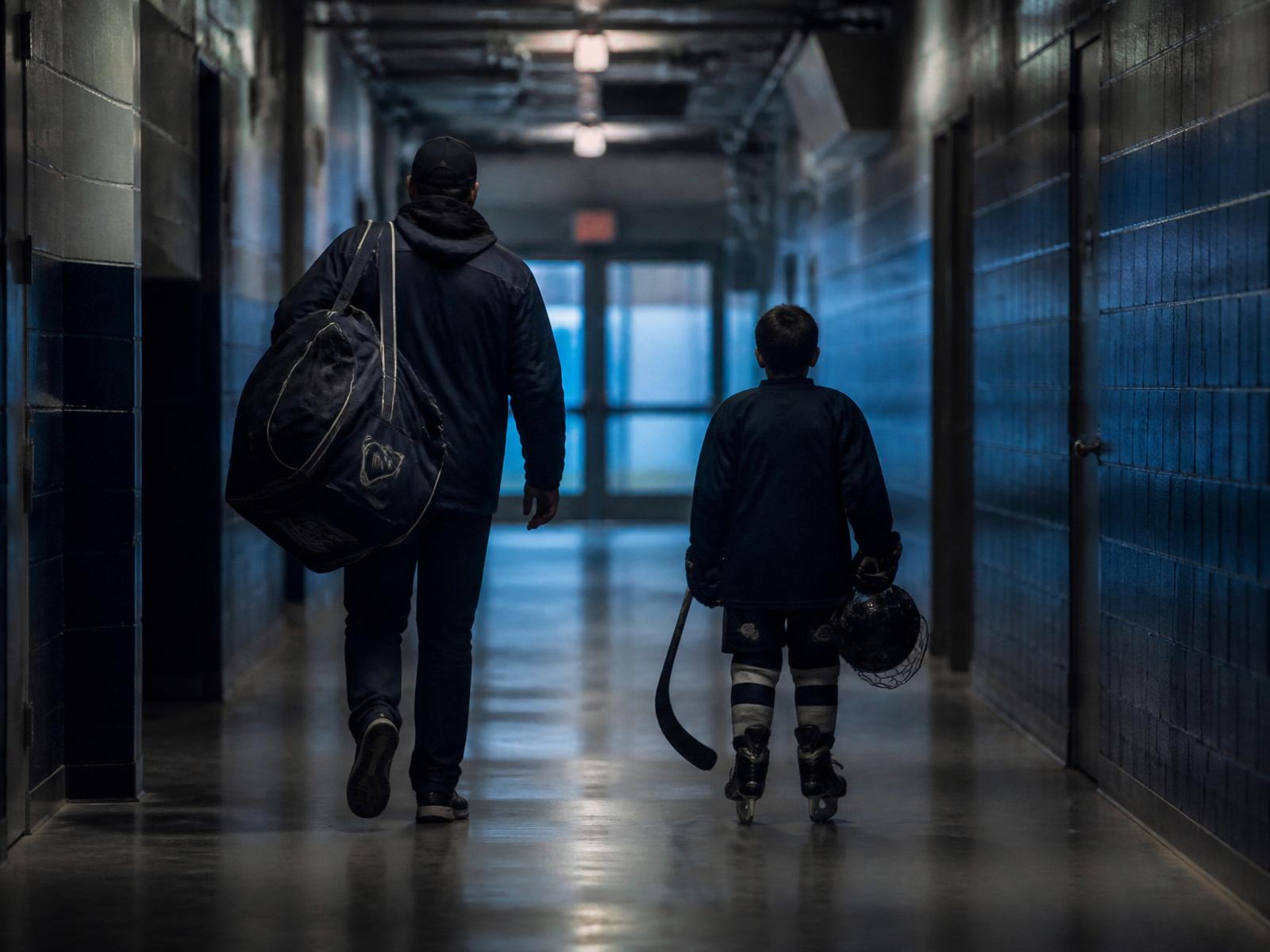
Decision Center · Cornerstone Guide
How Much Should Youth Hockey Really Cost?
A complete, practical framework for building your family's true hockey cost picture — program, travel, equipment, development, time — and deciding what is sustainable.
Guide at a Glance
Guide at a glance
Who This Guide Is For
Time to Read
Big Question
"What does this hockey path really cost our family — and can we sustain it?"
You'll Learn
- The six categories that make up total hockey cost
- Why travel, not registration, usually decides the total
- How to separate required expenses from optional ones
- What drives equipment, goaltending and development spending
- How AAA, prep and junior costs actually vary
- The time cost and opportunity cost families rarely name
- Red flags, green flags and the questions to ask before paying
- A budget worksheet and a five-question family sustainability test
Bottom Line
The right hockey investment is not the largest one.
Understand the total cost of a path, compare it with the player’s needs and goals, and choose an environment that is financially sustainable for the whole family.
Next Step
Section 01/36
Executive Summary
Almost every hockey family underestimates what a season costs, and almost none of them do it carelessly. They underestimate because the number they were quoted — registration, tuition, or a monthly payment — is the smallest part of a much larger picture. The rest arrives in gas receipts, hotel folios, restaurant tabs, replacement skates in January, a tournament nobody planned for, and Sundays that used to belong to the whole family.
The right hockey investment is not determined by spending the most money. Families should understand the total cost of a hockey path, compare that cost with the player's actual needs and goals, and choose an environment that is financially sustainable for the entire family. A program a family can afford for four straight seasons will almost always serve a player better than one that strains the household for a single year.
This guide will not tell any family how much they should spend. That is a household decision, shaped by circumstances no guide can see. What it will do is help a family build a complete cost picture, separate required expenses from optional ones, ask better questions before paying, and evaluate whether a hockey path is sustainable in money, time, and family life.
The most expensive option available is not automatically the best developmental option. Neither is the cheapest. Cost is a constraint and a signal, not a measure of quality. What matters is whether the spending has a clear purpose, whether the family can sustain it, and whether the player is actually being served by it.
Section 02/36
Guide At A Glance
Read this before tryouts, before signing a commitment, or in the middle of a season when the spending has quietly outgrown the plan. The purpose is organization and clarity, not judgment.
- Who this guide is for: families at any level — Learn to Play through junior — who want an honest, complete picture of what a hockey path costs before and during a season.
- What costs families should evaluate: program, travel, equipment, development, family logistics, and optional pathway costs — plus time and opportunity cost, which never appear on an invoice.
- What this guide helps families compare: two or more real options side by side, on total annual cost rather than headline price.
- What this guide does NOT provide: individualized financial advice, precise national averages, program pricing, rankings, endorsements, or any promise about development or recruiting outcomes.
Section 03/36
Why Hockey Costs Are Hard to Understand
Hockey costs are hard to understand because they are quoted in one currency and paid in another. Programs quote a fee. Families pay a season. The gap between those two things is where budgets break.
Most families anchor on the number they were told at the meeting — registration, tuition, or a monthly payment plan. That anchor is not dishonest, and programs are not necessarily hiding anything. It is simply the only number the program controls. Everything else depends on where you live, how far you drive, how fast your player grows, and how many optional things you say yes to between September and March.
| Usually budgeted | Frequently forgotten | Why it gets missed |
|---|---|---|
| Registration or tuition | Team fees collected separately by the manager | Charged after the season starts, often in smaller increments |
| Monthly payment plan | Tryout fees for next season, paid during this one | Falls in a different budget year in the family's mind |
| A rough equipment number | Mid-season replacement — skates, sticks, broken gear | Growth and breakage are unpredictable and easy to defer |
| Tournament entry, when it is in the program fee | Hotels, meals, gas, flights, rental cars, parking, tolls | Paid weekend by weekend, never totaled |
| A season of skills sessions | Camps, clinics, spring hockey, added lessons | Decided one at a time, months apart |
| Nothing | Missed work, lost weekends, other children's activities | Real household cost that never appears on an invoice |
What families typically price versus what they typically pay.
Section 04/36
The True Cost Framework
Every hockey expense a family will ever face fits into one of six categories. Building the picture category by category is what turns a vague sense of expense into a number you can actually evaluate.
| Category | What it covers | The question to ask |
|---|---|---|
| Program | Registration, tuition, team fees, league fees, ice, game and tournament fees, administration | What exactly is included, and what will be billed separately? |
| Travel | Gas, mileage, hotels, flights, rental cars, parking, tolls, meals on the road | How many weekends away, and how far is each one? |
| Equipment | Skates, sticks, helmet, protective gear, goalie equipment, bags, jerseys, apparel | What will need replacing this season because of growth or wear? |
| Development | Private lessons, small-group training, skating and shooting instruction, strength work, camps, clinics | What problem is each of these supposed to solve? |
| Family logistics | Time, driving, childcare, missed work, meals at home and away, household disruption | Can our family actually sustain this schedule? |
| Optional pathway costs | Showcases, extra tournaments, spring and summer teams, advisory services, additional travel | Is this a real need, or a response to pressure? |
The six categories that make up total hockey cost.
Section 05/36
Program Costs
Program cost is the figure most families are quoted, and it is the one that varies most in what it actually includes. Two programs can advertise similar fees and deliver very different seasons — one covering ice, tournaments, and jerseys, the other covering ice alone.
- Registration — the base cost of joining the program for the season.
- Tuition — used by academy and school-based models, often covering more than hockey alone.
- Team fees — collected by a team manager for the specific team's expenses, frequently separate from registration.
- League fees — the cost of competing in a particular league or division.
- Tryout fees — charged before the season and often non-refundable.
- Tournament fees — sometimes bundled into the program fee, sometimes billed per event.
- Practice ice — additional ice purchased beyond the base allotment.
- Game fees — officials, scorekeeping, and game-day costs at some levels.
- Administrative fees — insurance, association or governing-body registration, uniforms, processing.
Ask for the answer in writing, and ask what last season's families actually paid in total — not what the fee was. Reputable programs are generally willing to have that conversation. Vagueness at this stage rarely improves after a family has committed.
Section 06/36
Travel Costs
Travel is where the honest total most often separates from the quoted price. It is also the category families are most capable of estimating accurately in advance, because the schedule usually exists before the season does.
- Gas and mileage — including practice commutes, which accumulate quietly across five months.
- Hotels — often two or three nights per tournament, sometimes at a team-block rate.
- Flights — for teams with a national schedule, potentially for more than one family member.
- Rental cars — required at most fly-in events.
- Parking and tolls — small individually, meaningful across a season.
- Meals on the road — typically the most underestimated single line in a travel budget.
- Tournament weekends — the full cost of a weekend away, not just the entry fee.
| Travel line | How to estimate it | Notes |
|---|---|---|
| Practice commuting | Round-trip distance × practices per week × weeks in season | Frequently larger than tournament driving |
| Local and regional games | Round-trip distance × away games | Check the published schedule before you commit |
| Tournament driving | Round-trip distance × number of drive-to events | Includes in-town driving across the weekend |
| Hotel nights | Nights per event × number of events × nightly rate | Ask whether team blocks are required |
| Air travel | Fares × travelers × number of fly-to events | Add baggage fees for hockey equipment |
| Meals away | People × meals per day × days away | The line most often forgotten entirely |
A structure for estimating a season of travel. Fill in your own numbers — the framework matters more than any example figure.
Section 07/36
Equipment Costs
Equipment is a recurring cost disguised as a one-time purchase. A full kit is bought once; skates, sticks, and protective gear are replaced repeatedly as a player grows and as equipment wears out.
- Skates — the highest-impact fit item, and the one most affected by growth.
- Sticks — the most frequently replaced item for many players, particularly at older ages.
- Helmet and facial protection — replaced on fit and on certification expiry.
- Protective equipment — shoulder, elbow, shin, pants, gloves, neck protection.
- Goalie equipment — a separate category with its own economics, covered below.
- Bags — including wheeled bags for travel programs.
- Jerseys and socks — sometimes included in the program fee, sometimes not.
- Team apparel — warmups, jackets, practice gear; frequently required, occasionally optional.
Three forces drive equipment spending: growth, wear, and position. Growth is unpredictable and can force a mid-season replacement no budget anticipated. Wear tracks ice hours, so a player skating five times a week replaces gear faster than one skating twice. Position determines the baseline — a goaltender's kit is a different category of expense entirely.
Why Goaltending Costs More
Goaltending carries a structurally higher equipment cost than any skating position. Pads, blockers, catchers, chest protectors, masks, and goalie sticks are specialized, expensive, and replaced on the same growth curve as everything else — sometimes faster, because fit affects both performance and protection more directly.
- Specialized equipment — a goalie kit has few interchangeable parts with skater equipment.
- Replacement cycles — growth changes pad sizing, and pads take heavy wear at higher volumes.
- Fitting — goalie equipment is fit-critical, which limits how much can be bought sight-unseen.
- Development expenses — many families add position-specific coaching, which is a real and separate line.
Section 08/36
Development Costs Outside the Team
Development spending outside the team is the fastest-growing category in youth hockey and the one families have the most control over. It is also the category where purpose matters most, because almost none of it is required.
- Private lessons — one-on-one instruction, usually the highest hourly cost available.
- Small-group training — lower per-player cost, often with comparable instructional value.
- Skating instruction — technical work on edges, stride, and mechanics.
- Shooting and skills instruction — position and skill-specific sessions.
- Strength training — age-appropriate physical development, increasingly relevant at older ages.
- Off-ice development — mobility, conditioning, and habit work that can cost very little.
- Camps and clinics — concentrated instruction, typically in spring and summer.
- Spring hockey — an additional season with its own program, travel, and equipment costs.
The useful test is simple: if a family cannot describe what a session is supposed to improve and how they would know it worked, that spending has no evaluation attached to it. Spending without a measure of success tends to continue indefinitely, because there is never a moment when it is clearly finished.
Section 09/36
The Cost of AAA Hockey
AAA is the level families most often ask about, and the level where cost varies most unpredictably. There is no single AAA price, and any figure presented as "the" cost of AAA hockey should be treated with skepticism. What can be described honestly is the structure of the spending.
| Category | What tends to change at AAA | What to verify locally |
|---|---|---|
| Program | More ice, longer season, higher administrative overhead | Exactly what the fee includes and what is billed separately |
| Travel | Wider competitive radius, more overnight events | The published schedule and the distance of each event |
| Equipment | Higher ice volume accelerates wear and replacement | Required team apparel and uniform packages |
| Training | Team-provided in some programs, expected on top in others | Whether skills and strength work are included or extra |
| Tournaments | More events, and more of them requiring travel | Number of events and which are optional |
| Additional expectations | Spring or summer participation, showcases, extra commitments | Whether these are genuinely expected or genuinely optional |
The cost structure of a AAA season, by category. Amounts vary enormously by organization and region.
AAA cost varies dramatically based on geography, the individual organization's model, the length and structure of the schedule, travel distance, tournament count, the player's age, and the family's own choices about optional spending. Two families at the same level in different regions can experience very different seasons financially.
Section 10/36
AA vs. AAA: The Financial Difference
The financial gap between AA and AAA is real in many markets and negligible in others. It depends far more on the specific programs available to a family than on the tier label.
- Registration — often, though not always, higher at AAA.
- Travel — usually the largest driver of any difference, because the competitive radius tends to widen.
- Tournament frequency — more events generally means more weekends away.
- Distance — a nearby AAA program can cost less in total than a distant AA program.
- Training — whether skills and strength work are included in the fee or expected on top.
- Equipment — driven by ice volume more than by tier.
- Time — more weekends committed, which carries its own household cost.
It is not true that AAA is always dramatically more expensive than AA. It is frequently more expensive, sometimes only modestly so, and occasionally less expensive than a AA option that requires substantially more travel. The only reliable comparison is the one a family builds from their own two options.
Section 12/36
The Time Cost
Before committing to a schedule, count the hours the way you would count the dollars. Most families are surprised by the total, and the surprise is far better absorbed in August than in January.
| Time category | How to count it | Who it affects |
|---|---|---|
| Driving | Round-trip time × practices and games per week × weeks | The driving parent, and any sibling in the car |
| Weekend travel | Full days away × number of events | The whole household |
| Practices | Ice time plus arrival, dressing, and post-practice | Player and driver |
| Games | Typically two to three hours per game, plus travel | Player and attending family |
| Tournaments | Two to three full days, several times a season | The whole household |
| Equipment management | Drying, laundry, sharpening, repairs, replacement shopping | Usually one parent, consistently |
| Scheduling and admin | Coordination, payments, forms, travel booking | Usually one parent, consistently |
| Recovery | Sleep, rest days, and downtime the player genuinely needs | The player, and the family's calendar |
Estimating the time commitment of a hockey season.
Section 13/36
The Opportunity Cost
Every dollar and hour committed to a hockey path is a dollar and hour not available for something else. This is not an argument against spending on hockey. It is simply an accounting reality worth naming out loud, calmly, as a family.
- Family travel — vacations not taken, or taken around a hockey schedule.
- Education — tutoring, enrichment, or savings directed elsewhere.
- Other sports and activities — for the player, and for siblings.
- Savings — retirement, emergency funds, or education savings.
- Other children — their programs, their schedules, and their share of attention.
- Family time — unstructured weekends, holidays, and ordinary evenings at home.
Section 14/36
When More Spending Helps
There are real situations where additional investment serves a player well. What they have in common is a specific problem being solved, not a general sense that more is better.
- Better geographic fit — a program that shortens a punishing commute can improve rest, school, and family life at once.
- Appropriate competition — moving a player who is under-challenged or over-matched into a level that fits.
- More practice opportunity — a program with meaningfully more quality ice, when practice ice is the actual constraint.
- Specialized development — targeted instruction for a named, identified weakness.
- Position-specific needs — goaltending, in particular, sometimes requires instruction a team cannot provide.
- Coaching and environment — an environment where the player is genuinely being taught.
Section 15/36
When More Spending Does NOT Help
Additional spending frequently produces no developmental return at all. These are the most common patterns, and none of them reflect badly on the families who fall into them — they are structural features of a competitive youth sport.
- Duplicate training — paying separately for skills the team program already delivers well.
- Excessive showcases — repeated events with no clear purpose beyond attendance.
- Too many tournaments — volume that produces fatigue and reduces practice time.
- Programs without clear purpose — added because they were available, not because they were needed.
- Chasing reputation — paying for a name rather than for an environment you have observed.
- Pressure from other families — matching someone else's spending without matching their reasons.
- Fear of falling behind — the most expensive motivation in youth sports, and the least reliable.
Section 16/36
The "Keeping Up" Trap
A great deal of youth hockey spending is decided in a lobby, in a group chat, or in a parking lot conversation that begins with what another family just signed up for. The reasoning is rarely stated plainly, but it usually reduces to: everyone else is doing it.
| Expense | Keeping-up reasoning | Purpose-driven reasoning |
|---|---|---|
| Spring hockey | Most of the team signed up, so we should too | Our player wants more game reps and is not showing signs of burnout |
| Private lessons | Other families have a skills coach | Edges were identified as a specific weakness by the coach and the player |
| Summer camps | It is what serious players do | The player wants it, it fits the budget, and it does not crowd out rest |
| Showcases | Everyone says you need exposure | Age-appropriate, aligned with an actual recruiting stage, verified as relevant |
| Additional training | We do not want to fall behind | A named gap exists, and this addresses it directly |
| Equipment upgrades | The other players have newer gear | Current equipment no longer fits or no longer protects |
The same expense, evaluated two different ways.
Section 17/36
The Highest-Spending Trap
The most durable myth in youth hockey is that spending is a pathway. It is not. Money can buy ice, instruction, travel, and access to events. It cannot buy development, and it cannot buy an outcome.
- More money does not guarantee development — improvement comes from teaching, work, repetition, and recovery.
- More money does not guarantee exposure — attendance at an event is not the same as being evaluated.
- More money does not guarantee team selection — rosters are decided by coaches on their own criteria.
- More money does not guarantee advancement — progression through levels is not purchasable.
- More money does not guarantee scholarships — aid decisions belong to institutions and vary by program and division.
- More money does not guarantee college opportunities — those depend on athletic development, academics, timing, and fit.
Section 18/36
Hockey Costs by Development Stage
Cost tends to change as players move through stages, but not on a fixed ladder. Individual programs vary substantially, and a family's local options matter far more than the label of the stage. What follows describes what typically drives cost at each stage, not what it should cost.
| Stage | Main cost drivers | Common surprises |
|---|---|---|
| Learn to Play | Registration, first full set of equipment | Skates outgrown within a season |
| Younger youth hockey | Registration, local travel, growth-driven equipment | Team fees separate from registration |
| Middle youth hockey | Longer schedule, more travel, added skills work | Tournament weekends and optional training stacking up |
| AA | Program fee, regional travel, tournaments | Distance to practices across a full season |
| AAA | Program fee, wider travel radius, more events | Expected spring or summer participation |
| Prep school | Tuition and school-related costs alongside hockey | Travel home, academic expenses, and school fees |
| Junior hockey | Structure varies widely by league and program | Housing, family travel, and league-specific requirements |
| College pathway | Recruiting-related travel, academic preparation | Assuming aid will offset planned family spending |
What tends to drive cost at each stage. Programs vary widely — verify locally.
Section 19/36
Boys' and Girls' Hockey Cost Considerations
Costs can differ between boys' and girls' hockey pathways in a given region, and the reasons are usually structural rather than intrinsic to the game.
- Available local programs — fewer nearby options in a region can mean longer travel for the same level of play.
- Geography — the density of programs varies significantly by area, and drives travel cost more than anything else.
- Travel requirements — a wider competitive radius raises fuel, hotel, and meal costs.
- Competition structure — differences in league and tournament formats affect how many weekends are committed.
- Player pathway — the routes toward prep, junior, and college differ, and each carries its own cost profile.
Section 20/36
Goalie Cost Considerations
Goaltending families face a distinct cost profile. Planning for it in advance is far more comfortable than discovering it in the middle of a growth spurt.
| Category | What drives it | Planning approach |
|---|---|---|
| Equipment | Specialized pads, blocker, catcher, chest protector, mask, sticks | Budget as a category of its own, separate from skater equipment |
| Replacement | Growth and heavy wear at higher ice volumes | Set aside a replacement allowance at the start of the season |
| Training | Position-specific work not always covered in team practice | Define the specific skill being addressed before committing |
| Camps | Concentrated position instruction, typically off-season | One well-chosen camp usually beats several stacked together |
| Goalie coaching | Regular position-specific instruction during the season | Ask whether the program already provides it before paying separately |
Goaltending cost categories and how to plan for them.
Section 21/36
The Cost of Changing Organizations
Changing programs carries costs beyond the new program's fee. Families evaluating a move should price the transition itself, not only the destination.
- New registration — often payable in full, regardless of what was paid elsewhere.
- New uniforms and team apparel — rarely transferable between organizations.
- Tryouts — fees for the new program, sometimes across multiple organizations.
- Equipment — new team requirements, and gear that no longer matches.
- Travel changes — a different practice location can reshape the entire travel budget.
- Lost deposits — commitments already made to the current program may not be refundable.
- Geographic changes — in some cases a move affects commuting, schooling, or housing.
Section 22/36
The Cost of Prep School
Prep school is an education decision with a hockey component, and its costs reflect that. Figures vary enormously between schools, and financial aid structures differ as well — verify current costs and aid policies directly with each school.
- Tuition — the largest line, differing substantially between day and boarding enrollment.
- Housing and board — for boarding students, typically bundled with tuition but worth confirming.
- Travel — trips home, school breaks, and family visits across the academic year.
- Equipment — school requirements alongside the player's own gear.
- Hockey-specific costs — team fees, travel, and off-season expectations.
- Academic expenses — books, technology, activity fees, and other school charges.
Section 23/36
The Cost of Junior Hockey
Junior hockey cost structures vary widely by league and by program, and they change over time. Some models carry substantial player fees; others carry few or none. Any general claim about "the cost of junior hockey" should be verified directly with the specific league and program a family is considering.
- Travel — team travel is usually organized, but family travel to games is not.
- Housing — billet arrangements, host family fees, or independent housing, depending on the model.
- Equipment — often partly provided, though this varies by program.
- Training — off-season and in-season development that may or may not be included.
- Family visits — flights, drives, and hotels to see a player who lives away from home.
- League and program structure — fee models differ significantly between leagues and levels.
Section 24/36
College Recruiting and Financial Expectations
Some of the largest spending decisions in youth hockey are made on the basis of college expectations, and those expectations are frequently wrong in predictable ways.
- Spending more does not create recruiting opportunities — coaches evaluate players, not budgets.
- Showcase attendance does not guarantee recruiting — attending an event is not being recruited at it.
- Advisors cannot guarantee results — no service can promise an outcome that belongs to a coaching staff.
- Scholarships rarely cover all costs, and aid structures differ substantially between divisions and programs.
What consistently matters is less glamorous and considerably cheaper: academic preparation that keeps every option open, steady athletic development over years rather than months, financial planning that does not depend on aid arriving, and verifying current eligibility and aid policies through official sources rather than through rink conversation.
Section 25/36
The Family Sustainability Test
Five questions decide whether a hockey path works for a family. They are more useful than any budget spreadsheet, because they cover the things a spreadsheet cannot see.
| Question | What it really asks | A healthy answer looks like |
|---|---|---|
| Can we afford it? | Does the total annual cost fit the household budget as it exists today? | Yes, without borrowing against essentials or drawing down emergency savings |
| Can we sustain it? | Could we do this again next season, and the one after? | Yes, or yes with adjustments we have already identified |
| Can we manage it? | Does the schedule work for every person in the household? | Yes, including in February, including when someone is sick |
| Is it helping? | Is the player developing, engaged, and glad to be there? | Yes, with evidence over months rather than a single good weekend |
| What would we have to give up? | What else in family life is being traded for this? | A trade the whole family has named out loud and accepted |
The five-question family sustainability test.
Section 26/36
Green Flags
Financial and planning green flags are signs that a program communicates honestly and that a family's plan is built on something solid.
- Clear costs — the program can state what a season costs and what drives variation.
- Transparent fees — a written breakdown of what is included and what is billed separately.
- Sustainable schedule — a published calendar the family has reviewed against their own.
- Family budget awareness — the household knows its total annual number and revisits it.
- Clear purpose for additional spending — each optional expense addresses a named need.
- Reasonable expectations — the program is honest about what it does and does not provide.
- Development value — the family can point to what the player is actually getting.
- No pressure tactics — decisions can be made on a normal timeline, with questions welcomed.
Section 27/36
Red Flags
None of these signals prove that a program is acting in bad faith. All of them are reasons to slow down, ask more questions, and get answers in writing before any money moves.
- Hidden fees — costs that surface only after a family has committed.
- Pressure to decide immediately — artificial deadlines on a decision worth thousands of dollars.
- Guaranteed outcomes — any promise of exposure, advancement, roster spots, or scholarships.
- Fear-based sales — the suggestion that a player will fall behind without a particular purchase.
- Unclear costs — an inability or unwillingness to state what a full season costs.
- Constant add-on expenses — a steady stream of new charges throughout the season.
- Pressure to buy unnecessary services — bundled extras with no stated developmental purpose.
- "Everyone is doing it" pressure — social pressure substituting for a reason.
- Claims that more spending guarantees advancement — the clearest signal of all.
Section 28/36
Questions to Ask Before Paying
Take this checklist to the meeting. Write the answers down. A program that welcomes these questions is generally a program worth considering.
- PROGRAM — What exactly is included in the fee?
- PROGRAM — What will be billed separately during the season?
- PROGRAM — Are there mandatory fees beyond registration — team fees, apparel, tournaments?
- PROGRAM — What did last season's families pay in total, on average?
- TRAVEL — How many weekends away are on the schedule?
- TRAVEL — How far is each event, and how many require flights?
- TRAVEL — What travel is required versus optional?
- TRAVEL — Are team hotel blocks required, and at what rate?
- DEVELOPMENT — What optional programs are expected of players here?
- DEVELOPMENT — What is genuinely necessary versus available?
- DEVELOPMENT — Is skills or strength work included in the fee?
- FAMILY — Can we sustain this schedule through the whole season?
- FAMILY — What is our total estimated annual cost, all categories included?
- FAMILY — What happens financially if our circumstances change mid-season?
Section 29/36
Build Your Hockey Budget
This is the worksheet. Fill it in for each option you are seriously considering, then compare the totals rather than the headline fees. Use your own researched numbers — the categories are the point, not any example figure.
| Category | What to include | Option A | Option B |
|---|---|---|---|
| PROGRAM | Registration, tuition, team fees, league fees, tryouts, ice, admin | $______ | $______ |
| TRAVEL | Gas, mileage, flights, rental cars, parking, tolls | $______ | $______ |
| EQUIPMENT | New gear, replacements, sticks, skates, apparel, bags | $______ | $______ |
| TRAINING | Skills, skating, shooting, strength, off-ice | $______ | $______ |
| CAMPS / CLINICS | Off-season camps, clinics, spring or summer programs | $______ | $______ |
| FOOD / HOTELS | Meals on the road, hotel nights, tournament weekends | $______ | $______ |
| TRANSPORTATION | Vehicle wear, additional insurance, airport costs, baggage fees | $______ | $______ |
| OTHER | Childcare, missed work, incidentals, contingency allowance | $______ | $______ |
| TOTAL ESTIMATED COST | Add every line above | $______ | $______ |
Total annual hockey cost worksheet. Complete one column per option you are comparing.
Add a contingency line of a reasonable percentage of the total. Something unbudgeted happens in most seasons — a growth spurt, a broken stick at the wrong moment, an added tournament. A contingency turns those from crises into line items.
Section 30/36
The Evidence Test
Before any significant hockey expense, run it through six questions. The test takes two minutes and prevents most regretted spending.
| Question | What you are testing | Warning sign |
|---|---|---|
| What does it cost? | The full cost, including travel and time, not the advertised price | You cannot state a number |
| What is included? | Exactly what the family receives for the money | The answer is vague or verbal only |
| What is optional? | Which parts are genuinely required and which are add-ons | Everything is described as essential |
| What problem does this solve? | The specific need this addresses for this player | The answer is "general development" |
| What can we verify? | Which claims can be checked with an official or primary source | The key claims rest on someone's word |
| Can we sustain this? | Whether the family can carry this cost through the season and beyond | It works only if nothing else changes |
The six-question evidence test for any hockey expense.
Section 31/36
Decision Matrix
Once the numbers are on paper, most hockey spending decisions fall into one of four bands. Place the option honestly and let the band suggest the next action rather than the final answer.
| Band | What it looks like | What to do next |
|---|---|---|
| Sustainable investment | Cost is manageable, the player benefits, the family schedule works, and development value is clear | Proceed, and re-run the sustainability test at mid-season |
| Investigate | Costs are unclear, benefits are uncertain, travel may increase, optional expenses are growing | Get written answers, total the actual numbers, then reassess |
| Pause | Budget pressure, unclear value, excessive travel, family strain, uncertain player benefit | Stop adding, remove purposeless spending, review in four to six weeks |
| Rethink the path | Costs are not sustainable, family circumstances changed, goals changed, or a different environment may fit better | Compare real alternatives on total cost and fit before the next commitment window |
Where a hockey path sits, and what to do about it.
Section 32/36
Family Huddle
Sit down together away from the rink, ideally not the day after a tournament. Fifteen minutes with these questions will surface more useful information than a month of separate worrying.
For the player
- • What parts of hockey matter most to you?
- • Which activities help you the most?
- • Which activities feel unnecessary?
- • Are you enjoying the schedule?
- • If you could drop one thing this season, what would it be?
For the parents
- • What are we actually spending, across every category?
- • What are we forgetting?
- • Can we sustain this — this season and next?
- • Are we spending with purpose, or by habit?
- • Are we responding to pressure from anyone outside this household?
- For the family: What are we giving up to do this?
- For the family: Is the schedule manageable for everyone, not just the player?
- For the family: How does this affect siblings, work, and time at home?
- For the family: If we had to reduce the total by a meaningful amount, what would we cut first?
Section 33/36
Real Family Questions
| The question | A practical answer |
|---|---|
| How much should we spend on youth hockey? | An amount your household can sustain across multiple seasons without strain. No guide can name that figure for your family — the useful work is knowing the total and choosing it deliberately. |
| Is AAA hockey worth the money? | It depends entirely on the specific program, the player, and the family. AAA can be excellent value or poor value. Evaluate the environment and the total cost, not the tier. |
| Can my player develop without expensive private lessons? | Yes. Many players develop very well through quality team practice, deliberate individual work, and appropriate challenge. Private instruction can help with a specific identified need; it is not a requirement. |
| Are hockey showcases worth the cost? | It depends on the player's age, stage, and goals. Attending an event does not guarantee evaluation or recruiting interest. Verify what an event actually offers before paying for it. |
| How much should we spend on spring hockey? | First decide whether spring hockey is right at all this year, then price it. "Spring Hockey: Is It Worth It?" works through the underlying question before the budget question. |
| Do we need private skating lessons? | Only if skating has been identified as a specific limitation and the team environment is not addressing it. Ask the coach what they would prioritize before booking anything. |
| Are we spending too much on hockey? | If the total is unknown, that is the first thing to fix. If it is known and the household is strained by it, the answer is probably yes — and it can be adjusted without leaving the sport. |
| Should we choose a cheaper organization closer to home? | It is often a strong option, particularly when it improves rest, school, and family life. Evaluate coaching, development, and fit alongside the cost — not the cost alone. |
| Does expensive hockey lead to better college opportunities? | No. Spending does not create recruiting outcomes. Development, academics, timing, and fit do. Verify current recruiting and aid rules through official sources. |
| How do we know if a hockey expense is worth it? | Name the problem it solves, decide in advance what improvement would look like, and review it after a set period. Expenses with no measure of success rarely end on their own. |
Questions families ask about hockey costs, answered plainly.
Section 34/36
What Families Can and Cannot Control
Section 35/36
Action Plan
- Step 1
Track what you currently spend
Go back through three months of statements and tag every hockey expense. Most families find the real number is meaningfully higher than their estimate.
- Step 2
Identify hidden costs
Add the categories that never make the budget: meals on the road, fuel, parking, mid-season replacements, missed work, and team fees collected separately.
- Step 3
Separate required and optional expenses
Two columns. Program, travel, and core equipment on one side. Everything elective on the other. The second column is where every real choice lives.
- Step 4
Identify what each expense is supposed to accomplish
Write one sentence per optional line. Anything you cannot finish the sentence for is a candidate for removal.
- Step 5
Compare hockey options by total cost
Use the budget worksheet or the Cost Calculator to price each real option end to end, then compare totals rather than program fees.
- Step 6
Evaluate family sustainability
Run the five-question test. Be honest about the schedule, the siblings, and next season as well as this one.
- Step 7
Remove spending that has no clear purpose
Cut the lines that failed step four. Reallocate some of it to a contingency allowance rather than to something new.
- Step 8
Build the hockey plan around the player and family — not pressure
Set the annual number on purpose, share it between both parents, and revisit it at mid-season. Decisions made against a chosen number are far easier than decisions made in a lobby.
Section 36/36
Key Takeaways
- The right hockey investment is not the largest one — it is the one that is sustainable, purposeful, and matched to the player's actual needs.
- Total hockey cost is program plus travel plus equipment plus training plus food plus hotels plus transportation plus time plus optional services plus opportunity cost.
- The quoted fee is the smallest reliable part of the picture. Travel and optional spending usually decide the total.
- Required and optional costs belong in separate columns. Almost every real decision lives in the optional column.
- A cheaper program that is farther away can cost more across a season than a nearer, pricier one.
- Goaltending carries a structurally higher equipment cost, which is a planning issue rather than a development requirement.
- Spending more does not guarantee development, exposure, advancement, roster spots, scholarships, or college opportunities.
- Time is a family resource as finite as money, and a schedule can be unsustainable even when the budget works.
- Verify current program fees, junior and prep costs, eligibility rules, and aid policies directly and locally — do not rely on averages or rink conversation.
- Expensive hockey is not automatically elite, and affordable hockey is not automatically lower quality.
- Every optional expense should answer one question: what problem does this solve?
- Choosing a sustainable path is a strategic decision, not a compromise. More seasons in the game is what development actually requires.
Reader Questions
Frequently asked questions
01How much does youth hockey cost?
There is no single answer, and any figure presented as a national average should be treated carefully. Total cost depends on the program, how far a family travels, how much equipment is replaced in a season, and how much optional training is added. The useful approach is to price your own specific option across six categories — program, travel, equipment, development, family logistics, and optional pathway costs — and verify current fees directly with the programs you are considering.
02How much does AAA hockey cost?
AAA costs vary dramatically by geography, organization, schedule length, travel distance, tournament count, and player age. Rather than relying on a general figure, ask the specific program what the fee includes, what is billed separately, and what last season's families paid in total. Then add your own travel, equipment, and optional training estimates to build the real number.
03Is youth hockey too expensive?
Hockey can be expensive, and the cost is a genuine barrier for many families. It is also more variable than its reputation suggests: house and local programs, shorter travel radiuses, used equipment, and restraint on optional spending can reduce the total considerably. The most useful question is not whether hockey is expensive in general, but whether the specific path in front of your family is sustainable for your household.
04Is AAA hockey worth the money?
It depends on the specific program, the player, and the family. AAA can be excellent value when the coaching is strong, the environment fits the player, and the family can sustain the cost and the schedule. It can be poor value when it is chosen for the label, strains the household, or duplicates development the player could get closer to home. Evaluate the environment and the total cost rather than the tier.
05Are private lessons necessary for hockey development?
No. Private instruction can be valuable when it addresses a specific, identified limitation, but it is not a requirement for development. Many players improve substantially through quality team practice, deliberate individual work, appropriate challenge, and adequate recovery. Before booking sessions, ask the coach what they would prioritize and decide in advance what improvement would look like.
06Are hockey showcases worth the cost?
It depends on the player's age, stage, and goals. Attending an event is not the same as being evaluated at it, and no event can guarantee exposure, recruiting interest, or advancement. Before paying, verify what the event actually offers, who attends, and whether it is relevant to the player's current stage. Younger players rarely benefit from showcase spending.
07How do families budget for youth hockey?
Start with a single total annual number built from eight lines: program, travel, equipment, training, camps and clinics, food and hotels, transportation, and other. Add a contingency allowance for growth spurts and unplanned events. Track actual spending monthly against that number, and separate required from optional expenses so mid-season decisions are easy to evaluate.
08What are the hidden costs of youth hockey?
The most commonly missed costs are meals on the road, fuel for practice commuting, hotel nights, parking and tolls, mid-season equipment replacement driven by growth, team fees collected separately from registration, tryout fees for next season, and missed work. Time and opportunity cost are also real, even though they never appear on an invoice.
09Is cheaper hockey worse hockey?
No. Price is not a reliable measure of coaching quality, teaching, or development environment. Some higher-cost programs are excellent and some are not; the same is true at lower cost. Evaluate coaching, practice quality, communication, ice volume, and fit with your player, and treat cost as a constraint to manage rather than a signal of quality.
10Does spending more improve recruiting chances?
No. Spending does not create recruiting opportunities, and no program, event, or service can guarantee exposure, advancement, roster spots, scholarships, or college opportunities. What consistently matters is athletic development over years, academic preparation, timing, and fit. Verify current recruiting, eligibility, and financial aid rules through official sources rather than through informal advice.
11How expensive is it to play goalie?
Goaltending carries a structurally higher equipment cost than skating positions, because pads, blocker, catcher, chest protector, mask, and goalie sticks are specialized and replaced on a growth and wear cycle. Fit matters more, which limits inexpensive buying options. Position-specific coaching is an additional category, though it is not a requirement — many goaltenders develop well through team practice and periodic position work.
12How can families reduce hockey costs?
Choose the closest program that genuinely fits the player, since travel is usually the largest controllable line. Buy used equipment where it is safe and appropriate, prioritize fit over brand, and set a replacement allowance in advance. Remove optional spending that cannot be tied to a specific need, choose small-group over one-on-one instruction where the value is comparable, share travel and lodging where possible, and ask programs directly about payment plans, financial assistance, or equipment programs.
References & sources
- Program fees, travel requirements, junior and prep cost structures, eligibility rules, and financial aid policies vary by region, organization, and season — verify current details directly with programs, leagues, schools, and governing bodies. — Beyond The Puck Editorial Standards
Next Step
Now weigh the level decision behind the number.
Once the total cost is on paper, work through whether the elite path is the right environment for your player in the first place.
Keep going
Continue Your Journey
Companion guides, pathway stages and tools for families pricing a hockey path.
Related Decision Guides
Decision Guide
The Real Cost of Elite Hockey
A deeper cost model for the elite youth path.
Decision Guide
Should We Play AAA Hockey?
The honest trade-offs of the elite youth environment.
Decision Guide
AAA vs. AA Hockey
How the two environments differ, financially and otherwise.
Decision Guide
How to Choose a AAA Hockey Organization
Evaluating a specific program once the tier is settled.
Decision Guide
What Level of Hockey Is Right for My Player?
Match the level to the player before pricing it.
Decision Guide
Should My Player Leave Their Current Hockey Organization?
What a move actually costs, beyond the new program fee.
Decision Guide
Prep School vs. AAA
Tuition, travel and the wider prep school decision.
Decision Guide
Junior Hockey Options Explained
How junior structures and cost models differ.
Decision Guide
Spring Hockey: Is It Worth It?
Decide the question before you price the season.
Decision Guide
Scholarships & Financial Aid for College Hockey
How college hockey aid genuinely works.
Decision Guide
Goalie Development Roadmap
What age-appropriate goalie development actually requires.